



According to the Environmental Protection Agency (EPA), sewer blockages are a leading cause of sanitary sewer overflows (SSOs) and often result from grease, roots, and debris. Historically, preventive sewer cleaning has been the preferred approach to prevent SSOs caused by blockages, where all sewers are cleaned periodically in a preventive manner to mitigate emerging blockages, while sewers with recurring problems (“hot spots”) are cleaned on a more frequent basis. While this approach is effective, it is not always efficient. Aggressive cleaning has consistently demonstrated its effectiveness for reducing SSO, but it comes at a significant cost.
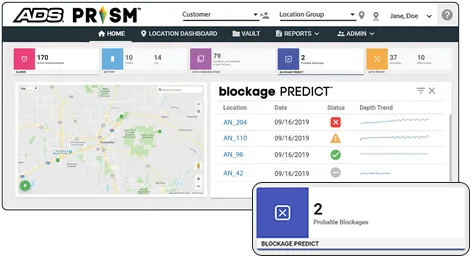
ADS blockage PREDICT and Overflow Mitigation can help...
- Ease Strained Resources
- Reduce Pipe Degradation Caused by Overcleaning
- Improve Personnel Safety
- Reduce Traffic Disruptions
Sanitary Sewer Overflows (SSO)
...occur when raw sewage is released into waters, causing water quality problems, back up into homes, damage to private/public property, threatening public health and safety, all while adding to already strained resource allocation.
Wastewater collection systems fall into one of two types: Combined or Sanitary. Unlike Combined Sewers, which are designed to collect large volumes of storm waters in addition to sewage and industrial wastewater, Sanitary Sewers are built to collect and transport only domestic, commercial and industrial wastewater for appropriate treatment. While there are similarities, there are unique approaches that have to be made to both types.
ADS provides a comprehensive solution for predicting blockages,
optimizing sewer cleaning, and preventing overflows.
This enables network operators with the ability to clearly understand the current hydraulics of the sewer system, allowing teams to respond in real time to identify and clear blockages regardless of the weather conditions, alert residents to potential flooding as well as construct models over time to improve network performance. ADS real-time monitoring provides continuous feedback at remote collection system sites; providing actionable insight on exactly when and where sewer cleaning is needed, eliminating exaggerated cleaning practices and reducing frequency. Ongoing, continuous sewer monitoring provides enhanced assurance against SSOs.


For efficient sewer cleaning, the ECHO enables utilities to employ the latest cleaning practices. Continuous remote monitoring with advanced visibility assures that cleaning is performed only when needed.